Why I Started a Portfolio (And What Almost a Decade of Building One Taught Me)
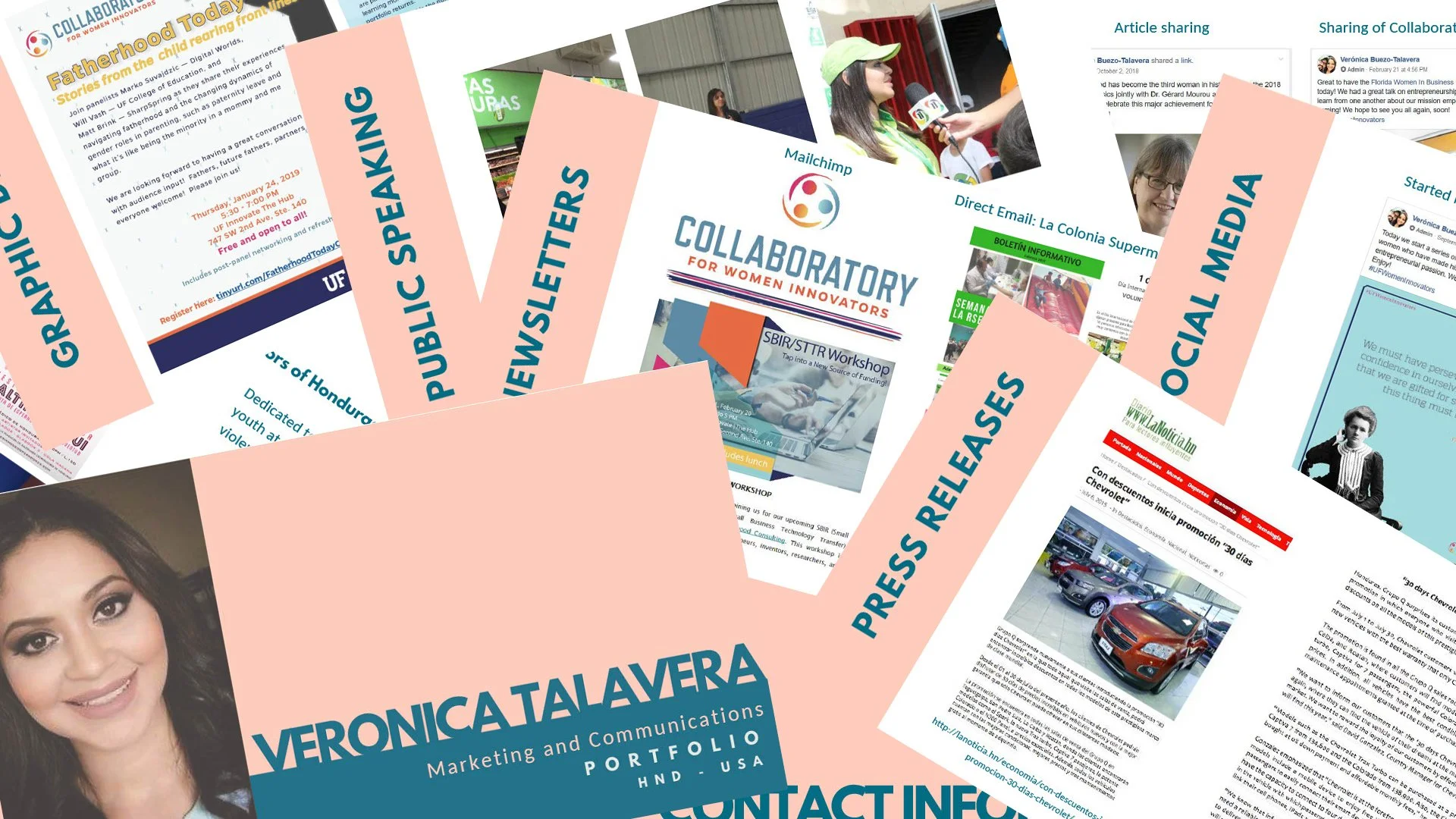
Where it started: a Canva booklet pulling together press clips, campaigns and coverage from my previous experience.
When I moved to the United States and started applying for jobs, I heard nothing. Not a rejection. Not a "thanks, but no." Just silence.
I knew I was good at the work. The positions I applied to spoke to me. I had years of marketing and communications experience from Honduras. But I didn't have a U.S. education or U.S. experience on paper, and that gap was hard to see past — for employers, and eventually for me.
So I did what I tell people to do now when a channel isn't converting: I looked at what was working for others in the same space and in a similar reality: expats trying to make it in a foreign country. I started following marketing and communications professionals. People with podcasts, blogs, a visible body of work. I picked one and sent a cold email. I told him my story: how I got to the U.S., what I'd done, and why I couldn't get past the application stage.
His advice was simple. Build a portfolio. Show what you've done, what you overcame, what you learned.
Version one: a Canva booklet in my bag
The first Portfolio wasn't a website. It was a printed booklet designed in Canva that pulled together the projects I was proudest of from Honduras. I brought it to an interview for a part-time role — 30 hours a week, a mix of office management and marketing work.
The interview went well. At the end, when they asked if there was anything else I wanted them to know, I pulled two printed copies out of my bag and handed one to each interviewer.
They told me afterward that no other candidate had done that. I got the offer the next day.
That was the moment I understood what a portfolio actually does. It's not decoration. It's evidence. It answers the question behind every interview: “Can you actually do this?” before anyone has to ask it out loud.
Version two: PDF, then a domain
The next time I moved roles, I sent a PDF version along with my application instead of printing copies. I realized that sending it along with the application would give me a better chance of opening the door. Same effect: it stood out, and I believe it factored into that offer too.
After that, I started treating the Portfolio as infrastructure rather than a one-time asset. Every time I wrapped a project, I pulled the numbers and saved them — traffic, engagement, conversion, whatever the campaign was built to move. I wasn't yet sure how each piece would be used, but I stored it anyway.
Eventually I registered veronicatalavera.com. The reasoning was simple: a PDF is static and only shows up when I send it. A domain is alive. Anyone can see current work at any time, without me having to hand it to them.
Writing the actual case studies was the hard part. Matching up analytics across platforms, especially for multichannel campaigns where the data lived in five different places, and then telling the story behind those numbers: the problem, the strategy, the outcomes. I spent weeks on one case, trying different iterations, adding or removing content, and editing as I saw fit.
That process has gotten faster with AI. I can now pull insights from a messy dataset, see where a campaign actually moved the needle and where it didn't, and turn that into a clear case study in a fraction of the time it used to take. The editing part is still a heavy lift, though, because I still believe the human eye and sentiment beat AI.
Five years of data, five years of adjusting
I started tracking the domain in 2021. Almost six years later, the numbers show what's working and what still needs attention — which is the same lens I'd apply to any campaign I run for someone else.
What's working
Growth is real, and recent. Total visits are up 92% year over year, unique visitors are up 97%, and pageviews are up 45%. The curve is mostly flat from 2021 to 2024, then climbs sharply, which tracks with when I started sharing the link more actively.
Direct traffic makes up 84% of visits. That's not an accident. I'm not trying to rank for competitive keywords, at least not yet; I'm sending a URL straight to the people evaluating me, and the data confirms that's exactly how the site gets used.
When people land, they go where the proof is. Home and Portfolio are the two most-viewed pages by a wide margin. Visitors aren't just skimming a bio. They're looking for evidence.
Where I see room to improve
Bounce rate is trending up rather than down, alongside an average time on page of 85 seconds. Read together, that suggests many visitors get what they need from the page they land and don't click deeper into individual case studies or other pages. For a portfolio, a quick, high-intent visit isn't automatically a bad sign. Someone doing due diligence before an interview doesn't need ten pageviews. But if the goal is for people to actually read the case studies, not just confirm the Portfolio exists, that's a gap worth closing: clearer navigation, stronger calls to click into specific work.
Organic search is small and still mostly branded. Impressions have grown, and average position has improved. However, the top keyword is still my own name (how many people in the U.S. would actually want to know more about a “Veronica Talavera?” 🫠). Search isn't yet doing much to introduce me to people who aren't already looking for me. This is fine for how I'm using the site right now, but the next thing to build is to ensure the portfolio surfaces at the top of SERPs and is recommended by LLMs for searches and questions about a marketing communications strategist, whether or not the search uses my name as a keyword.
The honest takeaway
None of this is finished, and I don't think it's supposed to be. The Portfolio started as a printed booklet I carried into one interview. It's now a domain with five years of traffic data telling me exactly where it earns attention and where I can improve. That's the difference between having a portfolio and running one. It's the same discipline I bring to every campaign I build for someone else.
What I'd tell anyone starting one
You don't need a design background to build a portfolio, and you don't need to work in a creative field. A portfolio isn't a design object; it's a record of outcomes. If you can describe an objective, what stood in the way, and what happened as a result, you have a case study.
It also doesn't need to be a website. A one-page document with three projects, framed the same way — objective, obstacle, strategy, result — does the same job. What matters is that it exists somewhere you can point to, instead of living only in your memory during an interview when you're least equipped to reconstruct it clearly.
For me, the Portfolio has been the thing that opened doors when applications alone didn't. Not because it's polished, but because it's proof.
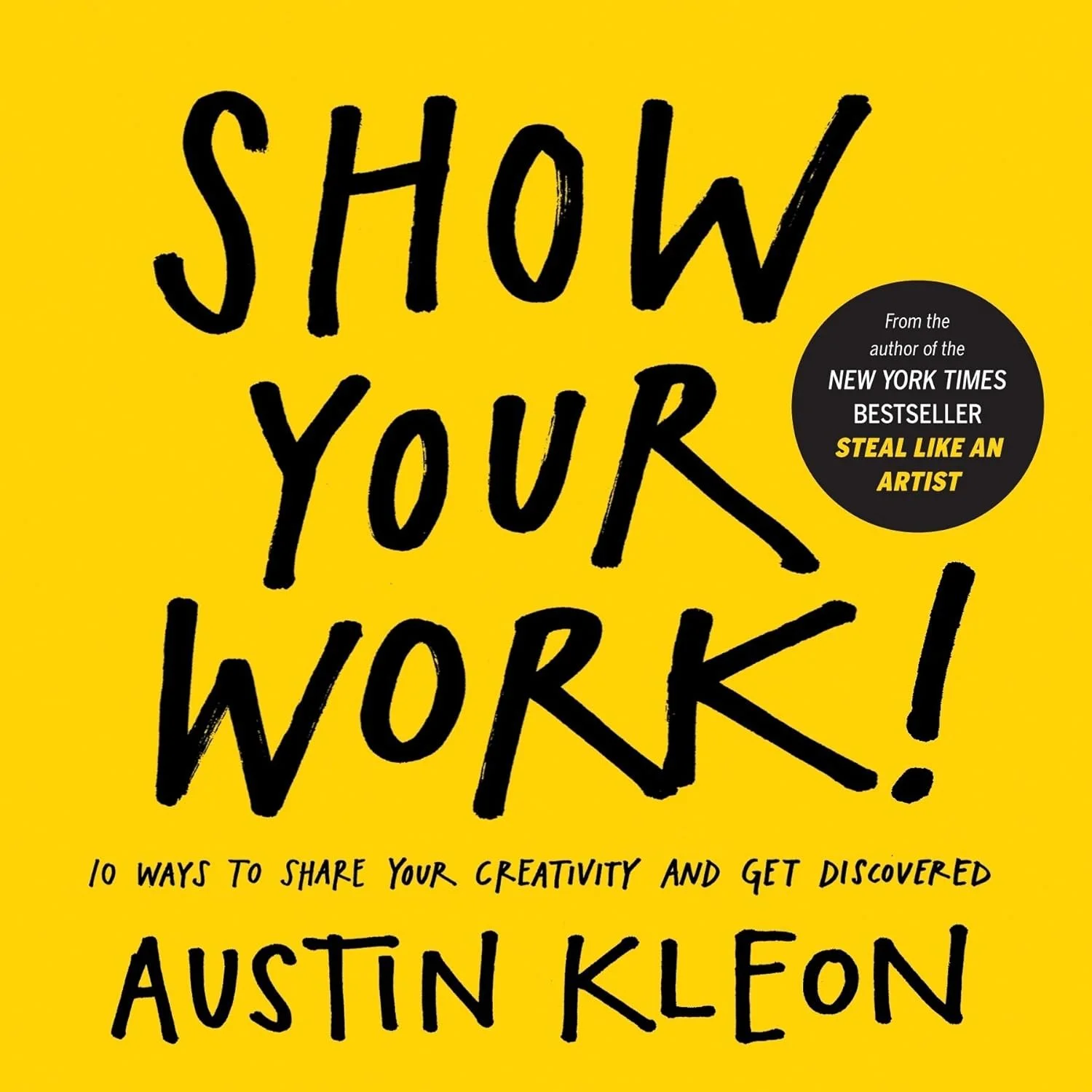
If you're looking for where some of this thinking crystallized for me, I'd point to Austin Kleon's Show Your Work! I read it well after I'd already started building the portfolio, but it gave language to what I'd been doing by instinct. As Kleon puts it: “It sounds a little extreme, but in this day and age, if your work isn’t online, it doesn’t exist. … If you want people to know about what you do and the things you care about, you have to share.”